Standard AI memory
Store chunks, rank by similarity, return the nearest match.
- Great when the answer already lives in one obvious passage.
- Weak when wording changes or the relevant evidence is fragmented.
Local-first memory for AI-assisted work
Give your AI the structure to reason through your material — not just search it.
EUR 5 / month · local-first · no cloud required
.clio/ layer beside your files. Nothing moves.
Useful answers come from structure, not just retrieval. Clio is built to give an assistant a memory it can actually reason with.
The Problem
That works when the answer already exists in one obvious passage. It breaks when the answer is spread across notes, calls, specs, drafts, and earlier situations, and the model has to connect them into a usable structure.
Store chunks, rank by similarity, return the nearest match.
The model finds pieces, but not the structure of the problem.
Clio builds a memory around concepts, facts, and linked situations.
What Clio Builds
Clio works inside an existing folder. It reads your material, extracts structure from it, and writes a hidden memory layer that tools and assistants can query locally.
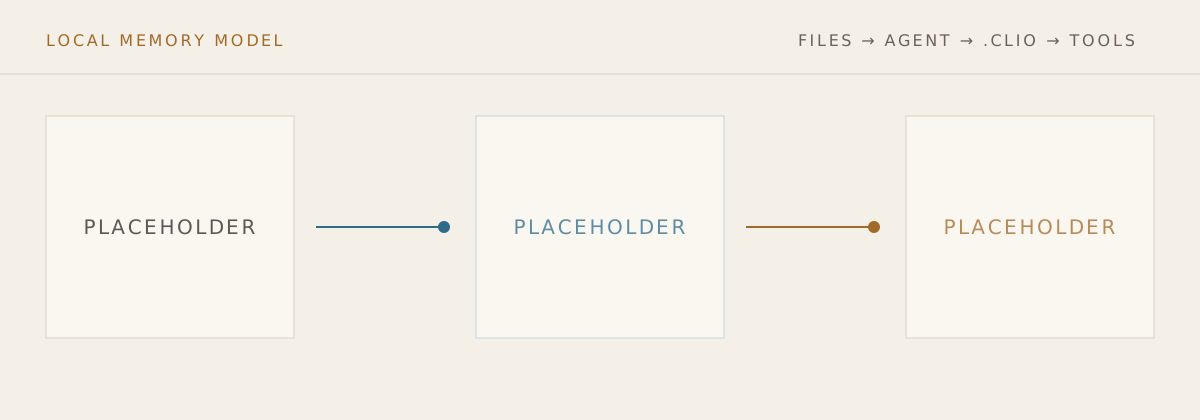
Notes, papers, transcripts, specs, reports, and working documents stay where they are.
Clio extracts concepts, links facts to them, and preserves related situations in a form the model can traverse.
When you query the system, the model can work with a structured memory instead of a flat list of similar passages.
In Practice
Imagine you are trying to understand why activation dropped after a pricing change. The relevant evidence is spread across onboarding notes, customer calls, experiment docs, and an earlier postmortem.
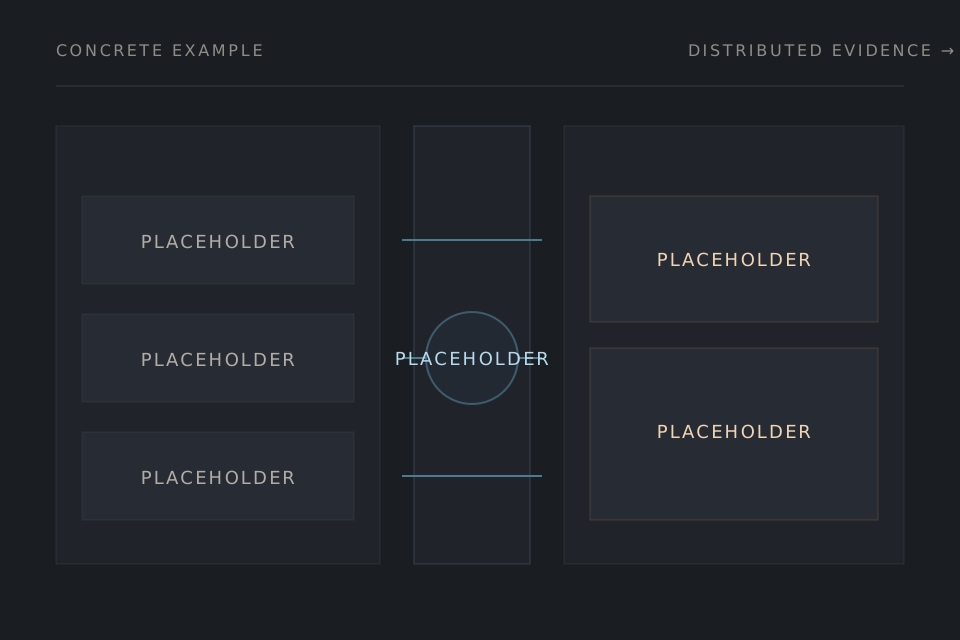
The point is not just that pricing changed. The point is that multiple pieces of evidence indicate the same underlying failure shape.
Pricing now appears before value is established.
An older onboarding failure showed the same structural problem.
Clio helps the model connect these into a stronger answer instead of returning a loose pile of related snippets.
Local-First Guarantees
Clio is designed to work inside your existing folder structure. It creates a hidden memory layer alongside your material, and the default posture is local-first.
.clio/
Clio creates a hidden .clio/ directory inside an existing folder.
Your source files are not moved or rewritten.
Graph data and interaction history live locally on your machine.
Nothing has to leave the device unless you choose a hosted model backend.
With Ollama, the full stack can stay local.
Commercial Setup
Clio is sold as a recurring subscription. The website handles purchase, billing routing, install confidence, and support. The product itself remains local-first.
One subscription gives you the Clio install path, a license key, and the ongoing ability to validate access through the runtime.
Checkout, receipts, and billing changes are handled through the hosted Lemon Squeezy flow instead of a custom checkout on this site.
Customers can use the billing portal, the order-recovery path, and the install guide without needing a heavy Clio cloud dashboard.
Questions, billing issues, and refund requests are handled directly through support, with the public policy linked in the footer.